

SEO Mistakes That Hurt Ranking
Anyone who has spent time trying to grow a website’s traffic knows the frustration of doing “everything right” and still not seeing results. More often than not, the problem isn’t a lack of effort — it’s a handful of quiet, easy-to-miss errors working against the site behind the scenes. The good news is that once these issues are spotted, they’re usually pretty straightforward to fix.
Below is a friendly, detailed walkthrough of the common SEO mistakes to avoid, why they trip up rankings, and what tends to work best for turning things around.
Understanding the Foundations: SEO Ranking Factors
Before diving into fixes, it helps to step back and look at what actually moves the needle. SEO ranking factors determine how search engines evaluate and rank a page, and they go far beyond simply publishing good content. Some of the most influential factors include:
- Page loading speed and overall Core Web Vitals performance
- Mobile-friendliness and responsive design
- Relevance and depth of the content itself
- Quality and trustworthiness of backlinks pointing to the site
- Technical health, including crawlability and indexing
A lot of sites assume that great writing alone will carry them, but even the best content can get buried if these fundamentals are being ignored. Regular check-ins on these basics tend to make a bigger difference than most people realize, and they lay the groundwork for everything else discussed below.
Technical SEO Mistakes That Quietly Hold Sites Back
Technical issues are some of the sneakiest ranking blockers, mainly because they often go unnoticed until traffic starts slipping. These problems live in the background of a website, so they’re easy to overlook unless someone is specifically auditing for them.
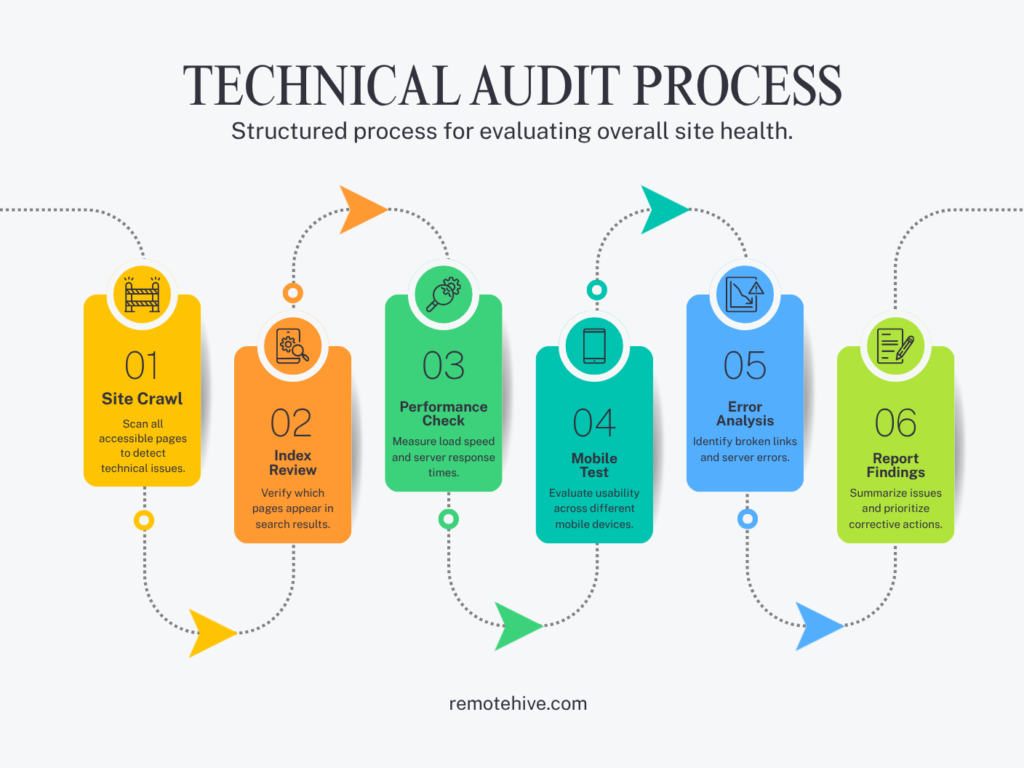
Ignoring Crawl Errors in Google Search Console
Crawl errors flagged inside Google Search Console point to pages that search engines simply can’t access properly. These often trace back to:
- Server hiccups or downtime during a crawl
- Resources accidentally blocked by robots.txt
- Misconfigured redirects or server settings
If left unaddressed, these errors mean certain pages never even get the chance to rank, no matter how strong the content on them might be. Checking Search Console regularly is one of the simplest habits a site owner can build.
Index Review
Index review checks how many pages a site actually gets indexed by search engines and why others get left out — usually done through Google Search Console.
- Google visits the page but skips indexing it, often due to thin or duplicate content.
- Bots spend time on low-value URLs instead of important pages.
- Thin or duplicate pages sneak into the index and dilute site quality signals.
Mobile Speed Test
Mobile page speed refers to how fast a website loads and becomes usable on a mobile device — and it’s one of the most heavily weighted technical SEO factors, since Google uses mobile-first indexing.
- Pages ranking on Google’s first result typically load in around 1.65 seconds on average.
- About 53% of visitors leave a mobile website if it takes more than three seconds to load.
- A one-second delay can reduce conversions by up to 20% and page views by roughly 11%.
Forgetting About Orphan Pages
Orphan pages SEO problems come up when pages technically exist on a site but aren’t linked to from anywhere else internally. Without any internal links pointing to them, search engines can struggle to even discover these pages, let alone rank them, regardless of how valuable the content might be. A periodic internal linking audit helps make sure nothing important gets left behind in the shuffle.
On-Page and Content Mistakes Worth Fixing
Even a technically sound site can lose ground if the on-page details aren’t given enough attention. These are the elements readers and search engines encounter directly, so getting them right matters just as much as the technical side.
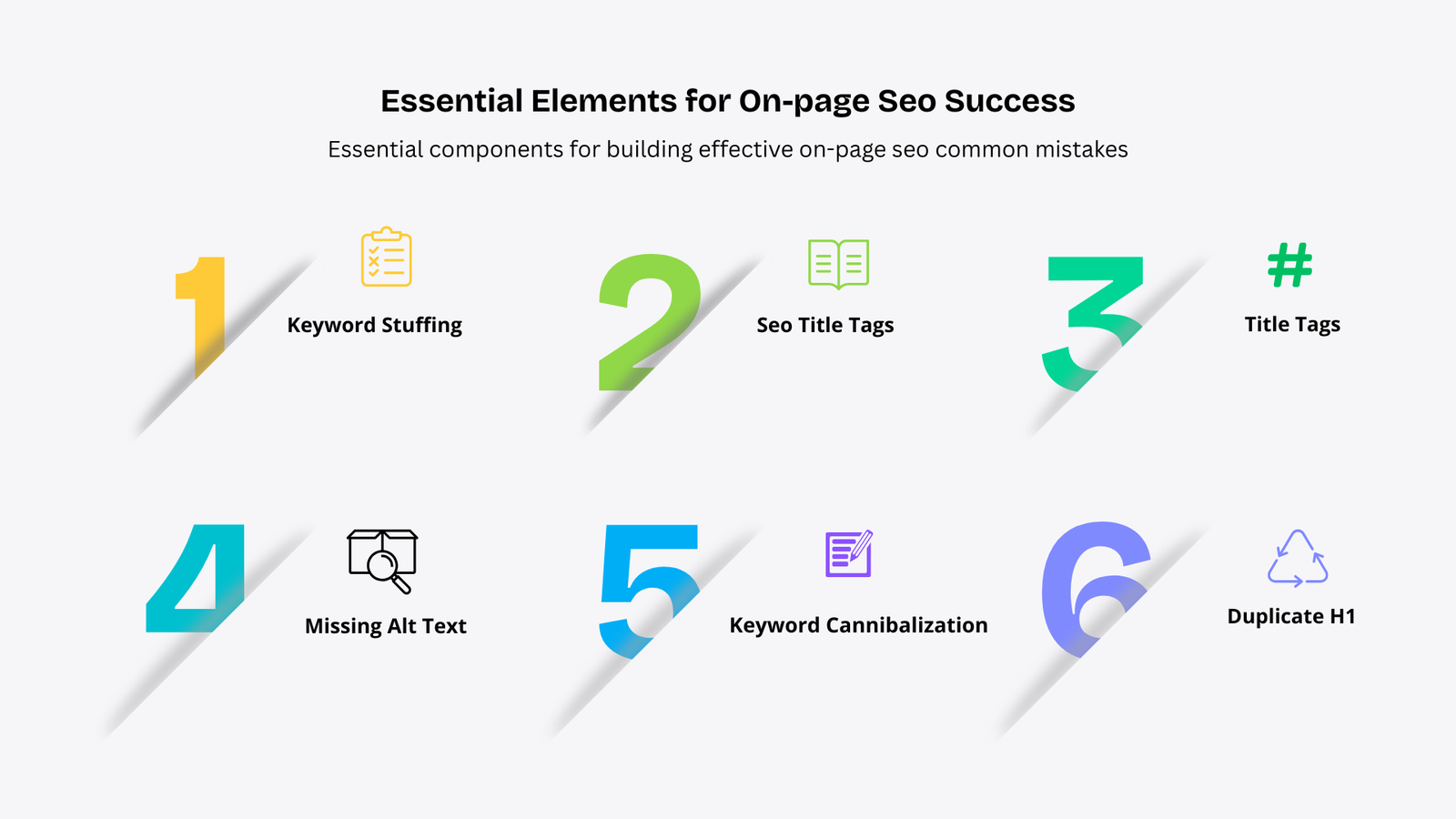
Stuffing Keywords In Too Aggressively
Stuffing keywords into a page, hoping it’ll boost rankings, is one of those old habits that just won’t die. Unfortunately, it tends to backfire in a few noticeable ways:
- The writing ends up sounding robotic and hard to read
- Readers notice and often leave the page quickly
- Search engines are quick to flag the pattern as spammy
These days, algorithms reward content that reads naturally and genuinely answers what people are searching for. A better approach is leaning into natural phrasing and related terms instead of repeating the same keyword over and over.
Skipping Meta Descriptions
A missing meta description won’t tank rankings directly, but it absolutely affects how many people click through from search results. Without one, search engines often generate their own snippet, and it’s rarely as compelling as something written with intent. Giving every important page a short, unique description that highlights its value tends to pay off in more clicks over time.
Repeating H1s and Title Tags Across Pages
When pages have duplicate H1 and title tags, it becomes harder for search engines to tell pages apart, which muddies the site’s overall topical clarity. This is especially common on:
- E-commerce sites with many similar product categories
- Location-based pages built from the same template
- Blog posts published quickly without a unique heading strategy
Every page deserves its own distinct title and heading that reflects exactly what that page is about, both for search engines and for readers scanning results.
Letting Pages Compete Through Keyword Cannibalization
Keyword cannibalization happens when several pages on the same site are all trying to rank for the same keyword, effectively competing against one another instead of teaming up. This leaves search engines unsure which page to prioritize, and often all of them end up performing worse than they should. Mapping out one primary keyword per page, and consolidating overlapping pages where needed, goes a long way toward avoiding this.
Neglecting Alt Text and Image Optimization
Missing alt text doesn’t just hurt accessibility — it also gives up a free opportunity to show up in image search results. Pair that with unoptimized images that slow down page load times, and a site ends up facing two SEO headaches at once: weaker accessibility signals and slower Core Web Vitals scores. The fix is simple enough:
- Compress images before uploading them
- Use descriptive, natural alt text for every meaningful image
- Choose modern file formats that load faster without losing quality
Link Building Mistakes That Erode Trust
Backlinks still carry serious weight in how search engines judge a site’s credibility, but only when they’re earned the right way. Cutting corners here tends to cause more harm than good.
Overdoing It with Anchor Text
Over-optimized anchor text — where the same exact keyword phrase gets used again and again in links — tends to look unnatural to search engines, almost like it’s being engineered rather than earned. A healthier link profile mixes things up with branded terms, generic phrases, and keyword variations. That variety helps everything feel more organic and less like an attempt to manipulate rankings.
Falling for Low-Quality Backlinks
Not every backlink is a good one. Low-quality backlinks coming from spammy, irrelevant, or low-authority sites can actually damage a site’s trustworthiness in the eyes of search engines. This gets even riskier when it overlaps with link farming — networks of sites built purely to trade or sell links with one another. Search engines have gotten quite good at spotting these patterns, and the penalties for being caught up in them can be steep, sometimes affecting an entire domain rather than just one page.
Risky Shortcuts: Black Hat SEO Tactics
Black hat SEO tactics — things like cloaking, hidden text, link schemes, or scraped content — might offer a quick win, but they rarely age well. Some of the most common examples include:
- Showing different content to search engines than to real visitors
- Hiding keyword-stuffed text behind design elements
- Automatically generating low-value content at scale
Search engines are constantly refining their ability to catch these tricks, and the fallout usually includes sharp ranking drops or, in serious cases, being removed from search results entirely. Sustainable growth almost always outperforms these shortcuts in the long run.
Wrapping Things Up
Most common SEO mistakes don’t happen all at once — they tend to build up slowly through skipped audits, rushed publishing, and outdated habits that never got revisited. By tackling technical issues like crawl errors and duplicate content, cleaning up shaky backlink profiles, and steering clear of shortcuts like keyword stuffing or link farming, a site sets itself up for much steadier, longer-lasting growth.
At the end of the day, consistent audits, solid technical health, and a genuine focus on what users are actually looking for tend to matter far more than chasing quick fixes.